
By: Babies Harmony Hub | 9 minutes read time
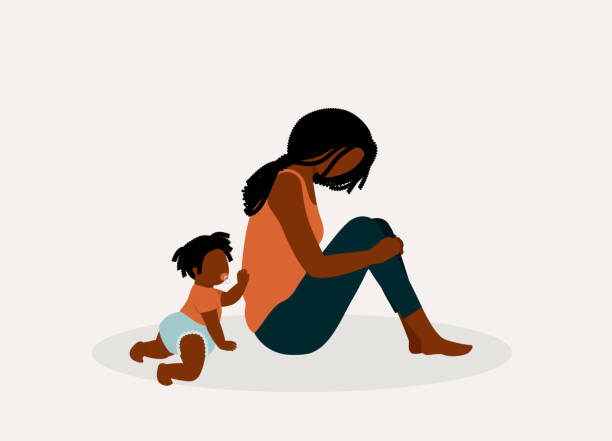
After the baby arrives, a quiet storm begins to erupt. It doesn’t always announce itself with thunder or lightning. Occasionally, it slips in silently, settling into the background while everything else seems to be filled with celebration, balloons, and well-wishes. That storm is postpartum depression—and it’s far more common than most people think.
Postpartum depression doesn’t care how prepared someone thought they were. It doesn’t care about nursery themes or perfectly packed hospital bags. It doesn’t skip over people just because they love their baby. And it definitely doesn’t look the same for everyone.
More Than the “Baby Blues”

Everyone talks about the baby blues—the mood swings, the weepiness, the emotional rollercoaster that tends to hit a few days after delivery. But when those feelings last longer than a couple of weeks or start growing heavier instead of fading away, it can signal something deeper.
Postpartum depression isn’t about being ungrateful or unloving. It’s not a weakness. Neither a good nap nor a hot meal can cure it. It’s a real, medical condition that can impact anyone—mothers, fathers, adoptive parents, and even surrogates.
What’s the challenge? It often hides behind a smile.
What It Can Feel Like

No two people experience postpartum depression the same way. But there are some patterns that tend to show up again and again. Feelings of worthlessness frequently surface. A sense of disconnection—from the baby, from loved ones Sleep doesn’t alleviate the fatigue. Anger suddenly erupts without warning. The guilt seems endless, like it has no end.
For some, it means crying every day, and not knowing means there’s something wrong; it means feeling a Some individuals characterize it as experiencing life through a distorted perspective. It’s like looking through a distorted glass. Others say it feels like drowning. What’s the most terrifying aspect?
What’s the most terrifying aspect? Occasionally the feelings come paired with terrifying thoughts—thoughts that make no sense, that go against everything someone believes. These thoughts can be so humiliating that they stay hidden and never come out. never spoken aloud.
But here’s the truth: having these thoughts doesn’t make anyone a negative parent. It makes them human—and someone who needs support.
Recognizing the Signs
The first step is noticing when something doesn’t feel right. Some of the most common signs include:
- Persistent sadness or hopelessness
- Irritability or anger that feels out of control
- Difficulty bonding with the baby
- Loss of interest in things that used to matter
- Anxiety or panic attacks
- Trouble sleeping—even when there’s a chance to rest
- Feelings of guilt, shame, or failure
- Thoughts of harming oneself or the baby
Some people only experience a few of these. Others check every box. There’s no single blueprint. The key is tuning into that inner voice that says, “This doesn’t feel normal.” That voice deserves to be heard.
How to Start Dealing With It
What’s the good news? There’s a way through it. It may not be quick, and it definitely won’t be linear, but healing is absolutely possible.
Here’s what can help:
1) Say Something—Out Loud
The hardest step is often the first one: telling someone. Whether it’s a partner, a friend, a doctor, or a therapist, opening that door can break the isolation that postpartum depression loves to thrive in.
It doesn’t have to be a perfect explanation. Even just saying, “I’m not okay,” can start the process. By speaking the truth, we can address real issues.
2) Professional Support is a Game Changer

There are therapists who specialize in postpartum mental health and can empathize with the situation. They don’t just throw around advice—they listen, validate, and help untangle the knot of emotions.
For some, medication becomes part of the healing plan. Antidepressants can offer real relief, especially when the depression is moderate to severe. There’s no shame in needing chemical support. Brains sometimes need help, just like broken bones do.
A healthcare provider can walk through all the options, from talk therapy and cognitive behavioral techniques to medication and support groups.
3) Rebuild Connection, One Step at a Time
Postpartum depression often brings disconnection—from loved ones, from joy, from the body, and even from identity.
Healing starts by reestablishing small connections. That might mean five minutes outside under the sun. I had a brief conversation with a reliable friend. I took a warm shower without feeling guilty. Write down one honest feeling in a journal.
These aren’t big leaps—they’re steps. Gentle ones. And over time, they add up.
4) Lower the Bar—Like, Way Lower
The pursuit of perfection hinders recovery. It’s simple to succumb to the temptation of striving to be the “perfect” parent, fulfilling all expectations, and managing everything meticulously.
However, we must lower our expectations during this period. Providing food to the baby and ensuring everyone’s safety is a significant accomplishment. Dishes can wait. Laundry can pile up. What matters most is survival and slowly moving toward stability.
Giving oneself permission to let go of unrealistic expectations is a radical act of self-care.
5) Build a Tiny Support Circle

Not everyone needs to know what’s going on. However, having one or two individuals who understand the situation can make a significant difference. Maybe it’s someone who’s been through it. Maybe it’s a partner who’s learning in real time.
Support doesn’t always look like advice. Occasionally, it’s someone dropping off a meal. Or texting, “You okay today?” You could spend 30 minutes observing the infant as someone takes a shower, sheds tears, or simply takes a breath.
Community helps loosen the grip of postpartum depression. Even if the baby is small, community can help ease the burden of postpartum depression. This is true even when the situation is chaotic.
Related Post
6) Find Words in the Dark

Journaling, voice notes, and anonymous forum posts—any method that organizes swirling thoughts— can help bring order to the chaos.
Even if you never share what’s happening, writing about it allows those thoughts to leave your head and enter the world. That act alone can reduce their power.
7) Sleep Is Medicine

It’s easy to laugh at the idea of sleep during the newborn phase, but even small pockets of rest can create big shifts. Sleep deprivation makes everything feel worse—more hopeless, more anxious, and more painful.
This is where help matters. Whether it’s a partner, friend, night nurse, or family member—asking for help with rest isn’t weakness. It’s survival.
When the brain gets rest, it has a better shot at climbing out of the fog.
8) Eat Something, Anything

Depression messes with appetite. Some people can’t eat at all. Others eat mindlessly. Nutrition isn’t the cure for postpartum depression, but it helps the body regulate itself.
Even just a banana will suffice. A smoothie. There are crackers and cheese available. A sandwich. It doesn’t have to be perfect. Fueling the body supports the brain, which supports healing.
9) Don’t Rush the Process
There’s no fast-forward button for recovery. Some people start to feel better in weeks. Others take months or longer. It doesn’t mean they’re doing it wrong. It means this is a process.
Healing isn’t linear. There are good days and bad ones. There might be a week of progress, followed by a wave of sadness. That’s normal. That’s real life.
Being gentle with yourself during setbacks is just as important as celebrating wins.
10) Keep Hope Within Reach
Postpartum depression lies. It says things will never get better. Nothing is worth attempting. That joy has vanished permanently.
But that’s the depression talking—not the truth.
Hope doesn’t have to feel big. For example, it might be a quote written on a bathroom mirror. It could also be a voice memo from a friend. There is a sticky note that says, “Just hold on.”
Whatever form it takes, keep it close.
Other Forms of Postpartum Mental Health Struggles
While postpartum depression is the most well-known, it’s not the only one. There are other conditions that deserve attention:
Postpartum Anxiety: Constant worry, racing thoughts, and fears about something happening to the baby.
Postpartum OCD: Intrusive thoughts that feel terrifying and repetitive, often about harm coming to the baby—even if the parent would never act on them.
Postpartum Psychosis: A rare but serious condition involving hallucinations, delusions, or extreme mood swings. The condition is a medical emergency that needs immediate help.
These aren’t flaws. They’re conditions. And they are all treatable with the right support.
For Partners and Loved Ones

Postpartum depression doesn’t just affect the person who gave birth. It ripples out in the family. For partners and close friends, it can be confusing to know what to do.
The most powerful thing anyone can offer is nonjudgmental presence. Not fixed. Not comparisons. Just presence.
Saying things like “You should be happy” or “You have so much to be grateful for” is more harmful than helpful.
Instead, try:
- “That sounds really hard. I’m here for you.”
- “You’re not alone in this.”
- “What do you need right now?”
- “Do you want help finding a therapist or doctor to talk to?”
Love is action. And consistent, quiet action can change everything.
Looking Ahead
Postpartum depression doesn’t define a parent. It doesn’t mean failure. It doesn’t erase love. It simply means someone is going through one of the hardest periods of their life while caring for a tiny human.
And that kind of strength? That’s nothing short of remarkable.
The darkness may linger for a while, but it doesn’t last forever. The fog lifts. The color returns. The laughter comes back—slowly, softly, and then all at once.
And when that happens, it’s not because the depression disappeared on its own. It’s because someone fought their way through, step by step, breath by breath, with the kind of courage that never gets enough credit.
Resources Worth Knowing
Postpartum Support International (PSI): Offers helplines, therapist directories, and virtual support groups.
Local mental health providers: Many communities have therapists trained in perinatal mood and anxiety disorders.
Emergency support: If thoughts of self-harm or harm to the baby are present, contact a crisis line or emergency room immediately.

 Babies Harmony Hub
Leave a comment